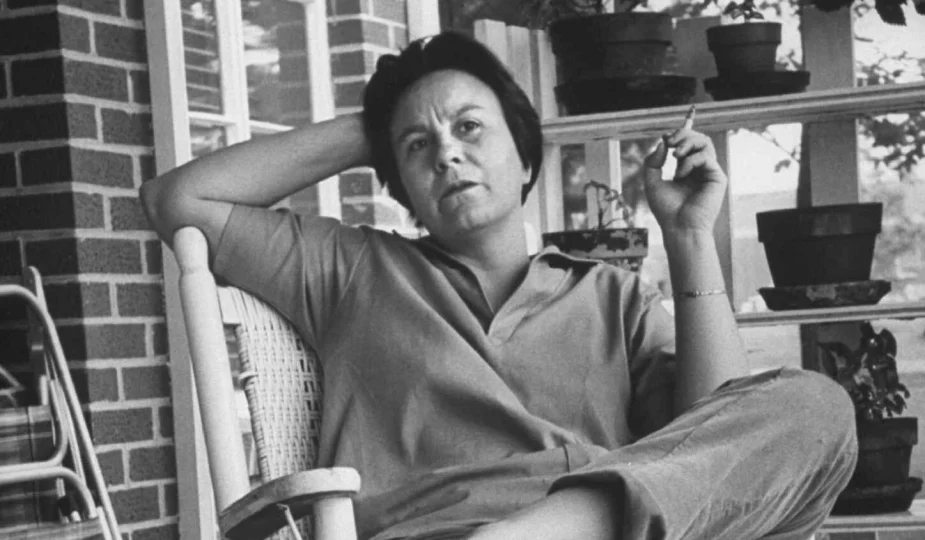
January 1958. New York is under a heavy snow, and a passerby on 82nd Street looks up to see typed pages drifting from a red‑brick apartment window. The woman who rushes out into the cold to gather them, trembling and embarrassed, is Nelle Harper Lee. Two years later the world will know her as Harper Lee, author of To Kill a Mockingbird — a novel that not only won the Pulitzer Prize but reshaped public conversation about race and justice. But the myth of a single inspired moment hides a far more complex story of craft, mentorship and sheer perseverance.
From small‑town Alabama to Manhattan’s literary salons
Nelle Harper Lee was raised in the Deep South; her voice was formed by a place of small‑town intimacy and the brutal realities of segregation. That specificity became the powerful engine of her fiction. When she moved to New York, she entered an editor’s world that could be unforgiving but also transformative. There she met Truman Capote, a close friend who opened doors to the literary elite — and later, as success reconfigured relationships, became a rival shadowed by jealousy.
The manuscript thrown from the window: desperation and decisive revision
The anecdote of the manuscript tossed into the snow is as dramatic as it is instructive. Overwhelmed by pressure and brutal editorial demands, Harper Lee had a breakdown and literally hurled pages into the winter air. Her editor, Tay Hohoff, did not soothe; she commanded. Hohoff’s tough but maternal guidance forced Lee to gather the pages, step back and rewrite from the ground up. The novel that emerged was not the first draft but the product of a rigorous reconstruction: the arc of the narrative was refocused, the characters recast, and the perspective reframed.
Scout’s view: why a child narrator changes everything
One of the novel’s most potent decisions was to tell the story through Scout Finch, a child. That choice is more than stylistic: it is ethical. Scout’s innocent, questioning gaze makes the injustices of her community clearer and more morally urgent. The child’s perspective allows readers — particularly white readers from the North, to whom the book first spoke — to see prejudice as a learned deformity rather than an abstract political issue. This narrative lens humanises complex social problems and makes them accessible to a wide readership.
Atticus Finch: the moral center
The transformation of Atticus from an earlier, less sympathetic figure into the principled lawyer we know was central to the novel’s success. Under Hohoff’s guidance, Atticus became the moral anchor: calm, decent, and courageous. His courtroom insistence on justice — even in a system stacked against it — elevated the novel into an emblem of conscience. Gregory Peck’s portrayal in the film adaptation immortalised Atticus as an archetype of integrity; the movie helped ensure the story’s reach and cultural longevity.
Gender and anonymity: the choice of a name
Publishing as “Harper Lee” rather than “Nelle Harper Lee” or otherwise masked any immediate preconception of a female authorship. Whether deliberate or circumstantial, the neutral presentation allowed the book to be read first for its content rather than the gender of its creator — a small but significant factor in the climate of mid‑20th‑century publishing. The novel’s moral urgency transcended this detail, but the choice of byline reflects the strategic realities women writers faced then.
Friendship, rivalry and the fragile life of literary fame
Lee’s friendship with Truman Capote was crucial early on: he introduced her to editors and helped embed her in the New York scene. Yet fame changes dynamics. When Lee’s book exploded into popular and critical success, tensions emerged. Capote’s own literary trajectory — culminating in the monumental In Cold Blood — intersected with Lee’s in complicated ways, and their relationship cooled under the weight of envy and competition. Lee, however, handled the success with a retreat: she largely withdrew from public life, preferring privacy and the steady management of her estate by her sister Alice.
The novel’s reception and legacy
To Kill a Mockingbird struck a chord immediately: it sold millions of copies, won the Pulitzer Prize, and became required reading in classrooms across the United States and beyond. The book’s combination of moral clarity, humane characterisation and narrative warmth made it a unique civic text. Yet its legacy is complex: debates around representation, the limits of its portrayal of Black experience through a white narrator, and later controversies about sequels and posthumous publications have kept the conversation alive.
Harper Lee’s disappearance from the spotlight
After her dazzling debut and the film’s success, Harper Lee chose retreat over celebrity. She became a private figure, supported by the financial security of royalties and the care of her sister. That withdrawal has itself become part of the myth: an author who produced one defining work and then opted out of the literary circuit. It speaks to a temperament that valued personal integrity and a different sense of authorship — one less driven by publicity than by the quiet achievement of creating a lasting text.
Why revisit the novel today?
To Kill a Mockingbird remains relevant because it asks readers to confront the moral choices of ordinary people. In times when questions of race, justice and memory are again at the centre of public debate, Harper Lee’s novel offers both a mirror and a pedagogy — showing how empathy, courage and small acts of decency matter. But it also invites critical rereading: to interrogate whose voice we hear, how histories are represented, and how stories shape social conscience.
Practical reading guide
Harper Lee’s story is a reminder that literary masterpieces are rarely spontaneous miracles but the outcome of painstaking revision, steadfast editorial partnership, and sometimes agonising personal struggle. That the manuscript once lay scattered in the snow and later became a cornerstone of moral literature is testimony to what persistence, craft and a brave moral imagination can achieve.