Matilda De Angelis at Venice: why her plea about migrants matters now
At the Venice Film Festival this year, Matilda De Angelis did more than promote a debut film — she used her platform to humanise a complex, politicised issue. As the lead and executive producer of Balcanica, De Angelis spoke movingly about the human faces behind migration routes: “We should consider migrants as people — they are our children and our mothers.” It’s a simple sentence, but one packed with moral urgency. On a stage usually dominated by glamour and choreography, her words cut straight to the heart of what the film aims to do: restore identity and empathy to people too often reduced to statistics.
Balcanica: a film born of compassion and responsibility
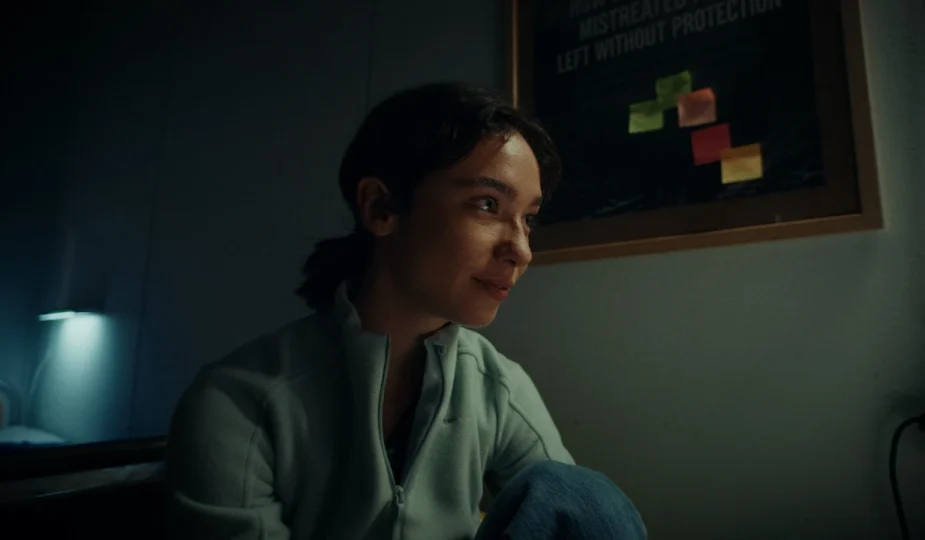
Balcanica, directed by Nicola Sorcinelli and shown in competition during Venice’s Giornate degli Autori, starts from a dramatic yet familiar premise. The story follows Nazar, a conductor forced to flee Afghanistan after music is banned, and his young son Jalil as they navigate the dangerous Balkan route toward Italy carrying the hope of returning to music and rebuilding their lives. Their journey collides with Greta, played by De Angelis, a young Italian doctor whose choices complicate professional boundaries and moral responsibility.
De Angelis: actor, executive producer, advocate
Matilda De Angelis’ involvement goes beyond acting. For the first time she serves as an executive producer — a role she embraced as an act of reciprocation for the faith shown to her at the start of her career. She explained that she understood what it felt like to be supported as a newcomer and felt compelled to give back. That commitment translates into an authentic engagement with the story and the people it represents, rather than a distant endorsement. Her dual role gives her both a voice and a responsibility to shape how the film speaks about migration.
From statistics to identity: Sorcinelli’s approach
Sorcinelli deliberately chose the Balkan route as his focus because it is one of the journeys less represented on screen and in news coverage. The director has a history of work with humanitarian organisations and short films that engage with these themes; his aim is to cut through the abstractions of policy and numbers and invite viewers to encounter migrants as whole persons with histories, talents and longings. In Balcanica, the journey becomes a human story — musical, intimate and moral.
Greta’s dilemma: ethics in action
Greta is not a simple saviour figure. De Angelis stresses her character’s interior conflict: how far can one go beyond one’s professional role? At what point does compassion demand civil disobedience? These questions are the film’s dramatic engine. Greta’s choices force viewers to confront the messy reality of empathy in action — the tensions between legal constraints, moral impulses and the messy, urgent needs of people in flight.
Why this film matters to audiences beyond film festivals
Balcanica arrives at a moment of heated political debate about borders and responsibility. By focusing on individuals rather than headlines, it offers a corrective to dehumanising narratives. For audiences, the film is an invitation to listen — to see migration not as a problem to be solved in abstract, but as a human experience demanding moral imagination. De Angelis’ plea — “they are our children and our mothers” — is a reminder that empathy can be the first step toward better policy and collective care.
Art as resistance: the role of creative freedom
De Angelis underlined another important theme: the vital role of artistic expression, especially where it is under threat. Balcanica begins in a place where music is forbidden — a symbolic act that reflects how art and culture can be censored, and how vital they are to personal dignity. Creating and showing this film is, in itself, an act of defence for freedom of expression.
What audiences should watch for in Balcanica
A final thought for viewers
Matilda De Angelis’ words at Venice are worth noting not only for their compassion but for their clarity. The film invites us to move from abstraction to recognition: to see migrants not as objects of debate but as people whose stories intersect with ours. In a media environment saturated with numbers, Balcanica — and De Angelis’ advocacy — asks us to pay attention to individual lives, and to let that attention shape how we act and vote and speak.