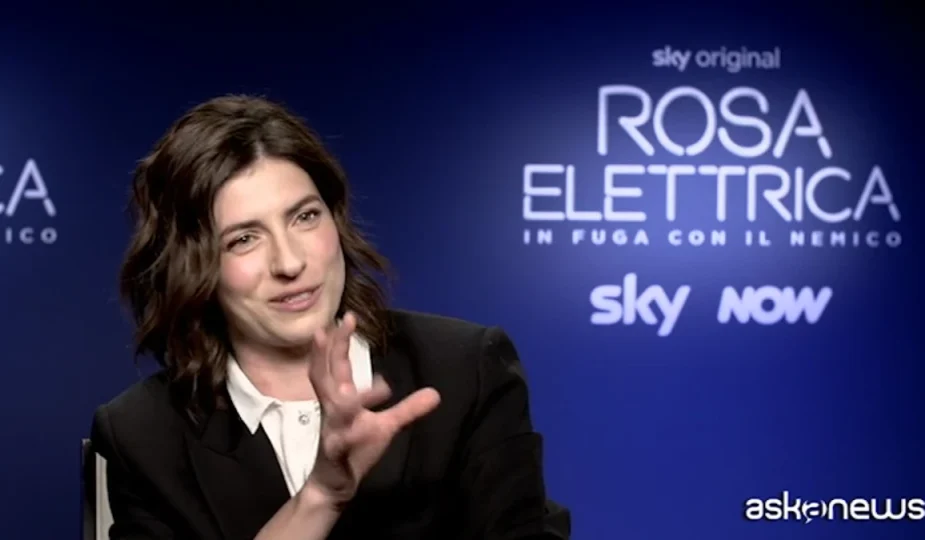
Rosa Elettrica arrives as a fresh, emotionally charged twist on the crime‑thriller formula — and Maria Chiara Giannetta is the beating heart of it. In this new Sky Original, streaming from May 8, Giannetta plays Rosa, a young undercover cop whose insulated inner life collides with a dangerous external world. As Daisy from Princess‑Daisy.co.uk, I’m always drawn to characters who reveal their truth through small gestures and hidden pain, and Rosa is precisely that kind of role: inward, intense and unexpectedly vulnerable. Here’s why this performance — and the series that surrounds it — deserves your attention.
A road thriller with an intimate centre
At first glance, Rosa Elettrica reads like a classic action‑thriller: a police operation goes wrong, and a protective detail turns into a flight across Italy. But the show’s true engine is not the chase scenes or the plot twists; it’s the evolving relationship between Rosa and Cocìss — the “baby boss” of the Camorra — played by Francesco Di Napoli. Forced into close proximity by circumstance, the pair form a charged, unpredictable alliance. The series uses the crime plot as scaffolding, while its real ambition is to explore emotional meeting points between two very different generations and worlds.
Maria Chiara Giannetta: from Blanca to Rosa
Giannetta’s previous role as Blanca made her a household name, but Rosa is a deliberate departure. Where Blanca is extroverted, radiant and outward, Rosa is inward, guarded and shaped by inner anxieties. The actress has said that Rosa “lives everything inside,” and that internality is palpable in every scene: a small tilt of the head, a half‑smile, a throat catch. These micro‑moments reveal layers of feeling — insecurity, fear, longing — that action sequences could never convey. It’s an actor’s role in the truest sense; the performance invites us to listen carefully.
Physical symptoms as storytelling: the psychosomatic cistitis
One striking detail is Rosa’s psychosomatic cystitis — a physical symptom connected to her emotional state. This isn’t a throwaway line; it’s a narrative device that externalises internal stress. In modern storytelling, bodily symptoms often function as a truthful alarm system: the body tells us what words cannot. For viewers, this gives Rosa an almost tactile realism. It’s a reminder that trauma and anxiety manifest physically, and acknowledging that truth lends dignity to the character’s struggles.
Music as emotional language
The series places music at its core. Director Davide Marengo has woven an electronic soundtrack into the narrative, reflecting Rosa’s past as a raver and a musician. There’s a key scene where Rosa plays “No Surprises” by Radiohead — a moment described as emotionally powerful. Music becomes the bridge between Rosa and Cocìss, a vocabulary that allows non‑verbal intimacy. For me, as a writer who champions sensory experiences, this choice is brilliant: music communicates what dialogue cannot.
Generational clash and fragile alliances
Rosa and Cocìss represent two generational modes of surviving the world. Rosa’s inwardness arises from introspection and past wounds; Cocìss’s brazenness masks vulnerability with swagger. Their dynamic is never just romance or alliance; it’s a negotiation of trust, identity and survival. The show’s strongest moments come when the screenplay allows silence and small gestures to speak. Those scenes give the series depth beyond its thrilling surface.
What makes Rosa Elettrica stand out
Several factors elevate this show above typical procedural fare:
Why audiences will care
Viewers increasingly crave characters they can grow with, not only chase. Rosa Elettrica answers that call. It’s a show with adrenaline, sure, but its emotional economy is what stays with you. Maria Chiara Giannetta’s transformation into Rosa is subtle and brave — a study in restraint that rewards patient viewing. The series invites us into a relationship that is messy, surprising and humane.
Talking points for style and wellbeing fans
There are also a few smaller, delightful details that will appeal to our Princess‑Daisy readership:
Theatrical DNA: from bestseller to screen
Rosa Elettrica is a loose adaptation of Giampaolo Simi’s bestseller, but the series takes liberties to focus on interiority. The result is more than a faithful reproduction; it becomes a new work in its own right. Marengo’s direction, Giannetta’s performance, and the evocative soundscape create a unique mood — one that lingers after the plot resolves.
If you love intelligent thrillers that value emotional truth, Rosa Elettrica is a must‑watch this season. It’s not just about who gets away with what; it’s about how two damaged people find, through music and danger, a fragile way of being seen.