
Why getting a cat for your child could be one of the best parenting decisions — what the research says
As World Cat Day approaches, many families are revisiting the perennial question: “Can we get a cat?” Beyond the promises of “I’ll feed it” and “I’ll clean the litter,” recent research offers nuanced evidence that living with a cat can contribute positively to a child’s psychological development. From empathy and responsibility to reduced loneliness and stress regulation, the relationship between children and feline companions appears to offer tangible benefits — provided the family context and the nature of the bond are right.
Not a miracle cure, but meaningful gains
Scientific reviews have pooled dozens of studies on pet ownership and child development. Overall, the literature suggests associations between pet presence and higher self‑esteem, improved social skills, and lower feelings of loneliness. However, results vary: some studies show clear benefits while others find minimal differences. The key takeaway for parents is that a pet alone does not guarantee improved outcomes — it’s the quality of the relationship, the family environment, and sustained caregiving that make the difference.
How a cat helps children learn empathy and responsibility
Caring for a cat naturally creates everyday moments that teach perspective taking. Feeding, grooming, observing body language and responding to a pet’s needs help children recognise non‑verbal signals and understand that another living being has needs and limits. These small, routine tasks build responsibility and encourage children to consider feelings beyond their own.
Emotional support and stress relief
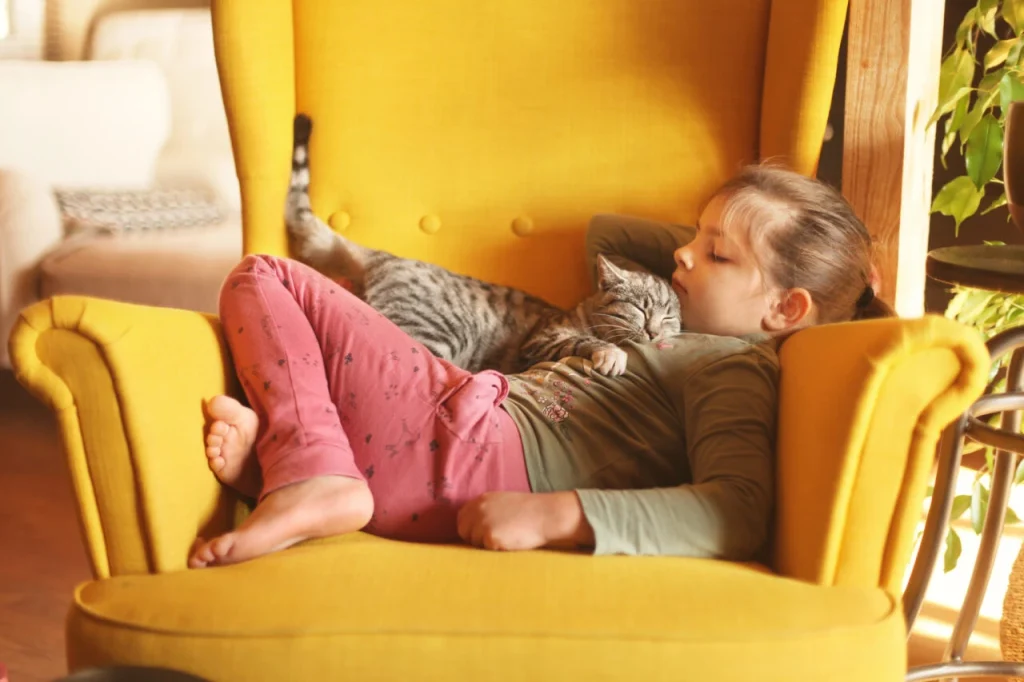
Many parents report that a cat becomes a “confidant” for their child — a silent companion who offers comfort without judgement. Research into human‑animal interaction suggests that tactile contact with animals, like stroking a cat or listening to purring, can reduce stress responses and promote feelings of calm. While individual responses vary, these soothing interactions can be especially helpful for children who need a non‑verbal source of reassurance.
What science says (and its limits)
Systematic reviews indicate potential benefits to children’s well‑being from pet companionship, but emphasise heterogeneity in methods and outcomes. Many studies rely on self‑reports and cross‑sectional designs, which can’t establish causality. Thus, while the evidence points to positive correlates — reduced loneliness, improved social skills, and enhanced emotional regulation in some cases — robust longitudinal research is still needed to confirm long‑term effects and clarify mechanisms.
Addressing common fears and myths
One long‑standing worry has been a supposed link between childhood cat ownership and later mental health issues, often traced to the parasite Toxoplasma gondii. However, extensive longitudinal research has not found an association between exposure to cats in pregnancy or childhood and heightened risk of psychotic symptoms in adolescence. The consensus in recent studies is clear: standard hygiene precautions — especially during pregnancy — are sensible, but there is no evidence that growing up with a cat increases the risk of psychiatric disorders.
How to ensure a healthy child‑cat relationship
Developmental stages and evolving bonds
The role a cat plays in a child’s life often changes over time. For toddlers, a cat may be a playful companion that introduces them to caregiving routines. For older children and adolescents, the same cat can become a source of emotional steadiness — someone to turn to in moments of stress or transition. This evolving bond can support social and emotional growth across different stages.
Practical considerations for families
Why it may be worth saying yes
While a cat won’t solve every parenting challenge, the accumulated evidence suggests that, in the right environment, a feline companion can be a powerful addition to a child’s emotional toolkit. From teaching responsibility to offering non‑judgmental comfort, cats often support social and psychological resilience. For families ready to commit to care and supervision, welcoming a cat could be both a joyful and developmentally beneficial choice.