
Why “The Tales of the Enchanted Garden” Is the Gentle Stop‑Motion Film We All Need Right Now
There’s something quietly radical about a film that slows you down. “The Tales of the Enchanted Garden,” a stop‑motion animation co‑directed by filmmakers from Slovakia, the Czech Republic, Slovenia and France, is exactly that: a patient, tender meditation on loss, imagination and family ritual. Built over eight years of painstaking craft, the film may feel modest at first, but its emotional reach lingers far longer than many louder, flashier animated features.
A simple story with deep feeling
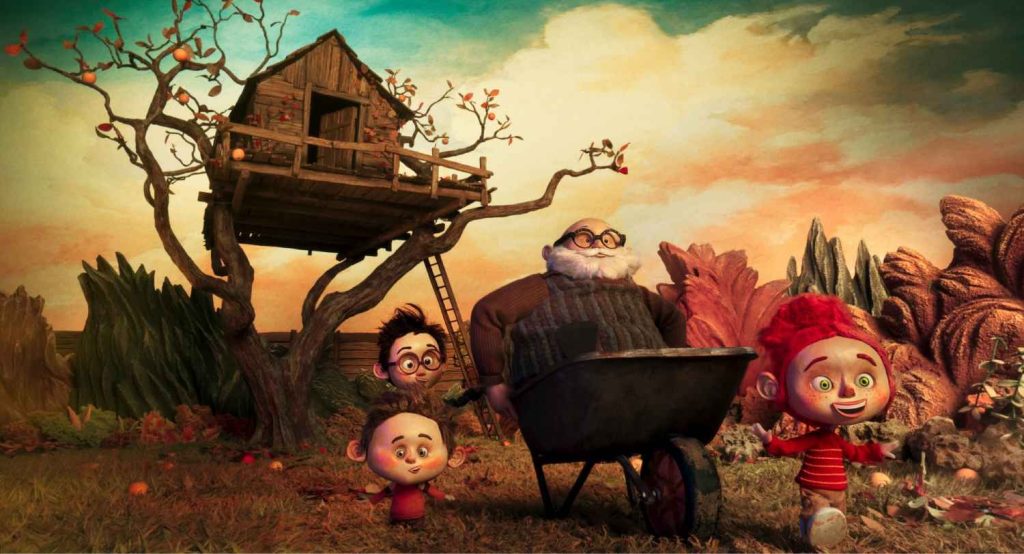
At the heart of the film is a small, intimate family: a grandfather and his three grandchildren. After the grandmother — the family’s great storyteller — is no longer there, the children and grandfather cope by carrying on the storytelling tradition. These invented tales become more than games; they are acts of consolation, ways to stitch grief into life without erasing it. The narrative is spare: rescuing an abandoned kitten leads them into a magical garden, then a wondrous forest, and finally to a soaring moment of flight that is both literal and symbolic.
Stop‑motion as material truth
Stop‑motion animation lends the film a tactile honesty. When every motion is crafted frame by frame, when puppets and sets are physically touched and lit, the result is a texture that digital animation struggles to replicate. The puppets creak and blink with human rhythm; fabrics fold and catch light like real cloth. This materiality reinforces the film’s themes: memory and repair are hands‑on practices. The craftsmanship is visible — and arresting.
On death, told through life
One of the film’s most remarkable achievements is the way it treats death. Rather than presenting mortality as a darkness to be avoided, the directors invite the audience into a view where death exists alongside delight. The stories the children invent are fantastical, but they are never frivolous: they are tools for keeping someone alive in memory. This approach feels especially resonant in an era where grief is often hidden or hurried — here, it is given room to breathe, to be softened by imagination.
Performance and design: subtlety over spectacle
The scale of performance is intentionally low‑key. There are no celebrity voice cameos or bombastic musical numbers; instead, the soundtrack supports the mood, subtle and supportive. The visuals rely on small, deliberate gestures: a puppet’s tilt of the head, a hand tracing a pattern on a tabletop, a bird unfolding its wings. Colour palettes favour warm, autumnal hues — browns, olive greens, muted golds — which make the film feel lived‑in and intimate.
Why Eastern European animation still matters
For anyone who loves the distinct voice of Eastern European animation — its ability to combine quirk, melancholy and moral seriousness — this film is a beautiful continuation of that tradition. The region has a long history of stop‑motion as an art form that doesn’t merely entertain children, but speaks to adults with poetic directness. “The Tales of the Enchanted Garden” fits perfectly into that lineage: it’s artful without being precious, emotionally precise without being manipulative.
Moments that stay with you
For families and cinephiles alike
While the film welcomes children, it is not only for them. Adults will find emotional depth and artistic refinement. It’s the sort of film you could comfortably take your teenage child to, or return to with a partner or a friend to discuss what the visual metaphors reveal about mourning and memory. In other words, it rewards both a family screening and a thoughtful, adult viewing.
Technical notes for the curious
Production values are consistently high: the miniature sets show exquisite detail, and the seams of the puppets are cleverly concealed to preserve illusion. The voice work is understated — naturalistic rather than showy — and the editing respects silence. There’s a humility to the filmmaking choices: nothing calls attention to itself; everything serves the story’s gentle pulse.
Why you should seek it out
In a season crowded with blockbuster animation and shiny spectacle, “The Tales of the Enchanted Garden” offers a counter‑proposal: that patience, craft and emotional honesty can be just as transporting. It’s a film that builds bridges between generations, reminding us that stories are how we carry one another through loss. If you’re longing for cinema that soothes and expands at once, you’ll find this an unexpectedly generous experience.