
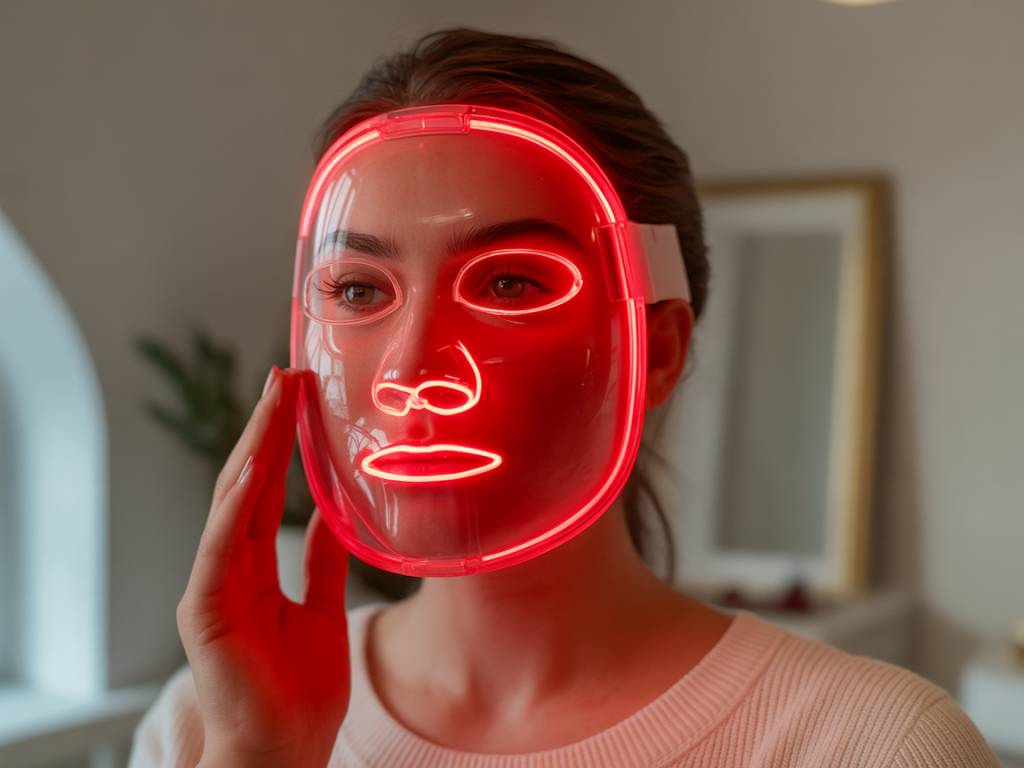
Red light therapy face masks have taken over social media. Scroll through TikTok or Instagram, and you will almost certainly come across someone wearing a glowing LED mask, promising “glass skin” and a filter-like finish in minutes. The latest product to catch shoppers’ attention is a £29 red light face mask that claims to deliver visible results in just 10 minutes per session. At that price, it sounds almost too good to be true. So, does it really work, or is it just clever marketing?
What Is a Red Light Face Mask and How Is It Supposed to Work?
A red light face mask is a wearable LED device that sits over your face and emits red wavelengths of light. Most models use visible red light (around 630–660 nm) and sometimes near-infrared light (around 800–850 nm). These specific wavelengths are believed to penetrate the skin and interact with cells in a way that supports skin repair and regeneration.
The theory behind red light therapy for skin is relatively simple but scientifically grounded. Light is absorbed by the mitochondria — the “powerhouses” of skin cells — boosting their energy production (ATP). With more energy, cells can carry out their normal repair functions more efficiently. Over time, this may translate into improvements in texture, tone, and firmness.
This is why red light therapy is frequently marketed as a treatment for:
- Fine lines and early wrinkles
- Mild loss of elasticity and firmness
- Dull, tired-looking skin
- Redness and mild inflammation
- Post-acne marks and uneven tone
The promise of “glass skin” fits into this picture. “Glass skin” is a K-beauty term describing skin that appears smooth, poreless, hydrated and evenly toned, almost like a reflective surface. A red light face mask will not literally turn your skin into glass. But if it improves texture, radiance, and fine lines, it can help move you closer to that refined, lit-from-within look many users are hoping for.
Can a £29 Red Light Face Mask Really Deliver ‘Glass Skin’ Results?
Professional LED treatments at dermatology clinics and reputable salons use powerful, precisely calibrated devices, and a series of sessions can be expensive. Against that backdrop, a £29 red light mask sounds suspiciously affordable. The key questions are about power, consistency and build quality.
In general, what makes an LED mask effective is not the price tag itself, but the combination of:
- The wavelengths used (ideally in the red / near-infrared range for anti-ageing)
- The intensity of the light (measured in mW/cm²)
- How evenly the light is distributed across the face
- How often and how consistently you use it
Many budget-friendly red light masks, including those around the £29 mark, tend to offer lower light intensity than professional devices. That does not mean they do nothing. It means that the effects are likely to be more subtle and slower to appear, and they will depend heavily on regular use.
When brands claim “glass skin in 10 minutes”, this usually refers to the length of each session, not to an instant, dramatic transformation after a single treatment. After one 10-minute use, some people might notice a temporary glow or slight plumping due to increased circulation. However, genuine improvements in lines, texture and overall clarity tend to require multiple sessions over several weeks.
What Science Actually Says About Red Light Therapy for Skin
Red light therapy, also known as low-level light therapy (LLLT) or photobiomodulation, is one of the few at-home beauty technologies with a growing body of research behind it. Studies have reported that red and near-infrared light can:
- Stimulate collagen production
- Enhance wound healing
- Reduce mild inflammation
- Improve the appearance of fine lines and skin roughness
These studies often use medical-grade devices, which may be more powerful than a typical £29 mask. Even so, the underlying mechanism is the same: consistent exposure to specific light wavelengths can encourage the skin to function more efficiently. That is promising for those seeking smoother, healthier-looking skin.
However, research also highlights that red light therapy works gradually. Improvements are measured over weeks or months, not from one quick session. Clinical trials typically involve multiple treatments per week for at least 4 to 8 weeks, sometimes longer. Marketing claims of “10-minute glass skin” can therefore create unrealistic expectations if taken literally.
What You Can Realistically Expect From a Budget Red Light Face Mask
If you are considering a £29 red light face mask, it is important to balance optimism with realism. Used consistently, a lower-cost device may offer several subtle but worthwhile benefits.
- Slight boost in radiance: Many users notice their skin looks a bit fresher and more awake after using LED light regularly. This is often due to improved circulation and better cellular activity.
- Gradual improvement in fine lines: Do not expect dramatic wrinkle reversal. However, fine lines, especially those linked to dehydration or mild sun damage, may look softer over time.
- More even tone: Red light can help calm mild redness and support healing, which may translate into a more balanced complexion with fewer post-blemish marks.
- Support for your existing routine: A red light mask will not replace sunscreen, retinoids or a good moisturizer. It can, however, complement them by creating a more supportive environment for skin renewal.
In short, a £29 red light face mask is unlikely to give you glass-skin perfection on its own. It can, though, be a useful, accessible tool in a broader skincare routine aimed at smooth, luminous, healthy-looking skin.
Key Features to Look for in a £29 Red Light Face Mask
Not all affordable LED masks are created equal. If you are browsing options and trying to work out which budget red light device is worth your money, pay attention to a few practical details.
- Wavelength information: Look for specific numbers, such as 630–660 nm for red light and possibly 800–850 nm for near-infrared. Vague labels like “rejuvenating light” with no data are less reassuring.
- Number and placement of LEDs: More diodes and even spacing usually mean more uniform coverage. If the mask only has a few LEDs concentrated in certain areas, some parts of your face may not receive enough light.
- Session length and settings: A simple 10-minute setting is often enough. Some masks offer multiple intensity levels or different colours (red, blue, yellow). For “glass skin” goals, red is the priority, while blue targets acne-causing bacteria.
- Comfort and fit: A mask that is too heavy, rigid, or uncomfortable will end up abandoned in a drawer. Soft silicone masks are usually easier to wear consistently.
- Eye protection: Bright LEDs can be uncomfortable to look at directly. Check for built-in eye shields or use your own eye protection if needed.
- Safety certifications: Look for basic compliance marks (such as CE in Europe) and ensure the device comes from a reputable retailer.
How to Use a Red Light Face Mask for Best ‘Glass Skin’ Results
Even the best red light mask will fall short if it is used randomly or incorrectly. To give a £29 device the fairest possible chance to work, integrate it into a consistent routine.
- Start with clean skin: Remove makeup, SPF and excess oil. A gentle cleanse is sufficient. Heavy products can form a barrier and reduce light penetration.
- Use for 10 minutes per session: Most at-home masks are designed for short, frequent sessions. Follow the manufacturer’s instructions rather than extending the time excessively.
- Aim for 3–5 sessions per week: Consistency matters more than occasional marathon sessions. Regular, moderate exposure is what supports cellular changes.
- Apply skincare afterwards: After your session, you can apply hydrating serums, barrier-supporting creams or targeted treatments. Some users find that their skin seems to absorb products more readily after LED therapy.
- Track your progress: Take a clear photo before starting and another after 4, 6 and 8 weeks. Subtle improvements are easier to spot over time when you have a visual reference.
If your goal is “glass skin”, pair your red light therapy routine with a consistent skincare regimen: daily sunscreen, a gentle exfoliant, hydrating layers with humectants and ceramides, and possibly a retinoid at night (if your skin tolerates it). The mask then becomes an extra layer of support rather than a miracle solution.
Who Might Benefit Most From a £29 Red Light Mask — and Who Probably Won’t
A red light face mask is not a one-size-fits-all answer, but certain skin types and concerns are more likely to see value from it.
- Best suited for: Early signs of ageing, mild textural irregularities, dullness, and low-level redness. If your skin is generally healthy but lacking radiance or starting to show fine lines, a budget LED mask can be a worthwhile addition.
- Helpful as support for: Post-acne marks and superficial pigmentation, when combined with sunscreen and brightening ingredients.
- Less suited for: Deep wrinkles, significant sagging, or pronounced sun damage. These concerns usually require more intensive treatments, such as in-office procedures, prescription skincare or higher-powered devices.
- Caution for: Very sensitive or reactive skin, people on photosensitizing medications, or those with certain medical conditions. In these cases, it is always wise to check with a dermatologist or healthcare provider first.
Is This £29 Red Light Face Mask Just Hype?
The marketing phrase “glass skin in 10 minutes” is, in many ways, the problem. It compresses a nuanced, gradual process into a single bold promise. A short 10-minute session will not transform your skin overnight. It can, however, be the building block of a routine that gradually improves how your skin looks and feels.
For shoppers, the key is to adjust expectations. A £29 red light face mask is unlikely to rival professional LED treatments or premium devices in power. But it can still deliver real, if modest, benefits when used regularly and paired with smart skincare habits. If you view it as an accessible tool that may boost radiance, support collagen and gently refine texture over time, it is much easier to feel satisfied with the results.
In other words, the technology behind red light therapy is not just hype — it is backed by emerging science and a growing number of satisfied users. The hype arises when brands overpromise on speed and intensity. Go in with patience, a clear routine and realistic goals, and a £29 red light face mask can be a surprisingly effective step toward that coveted smooth, luminous, “glass skin” effect.