
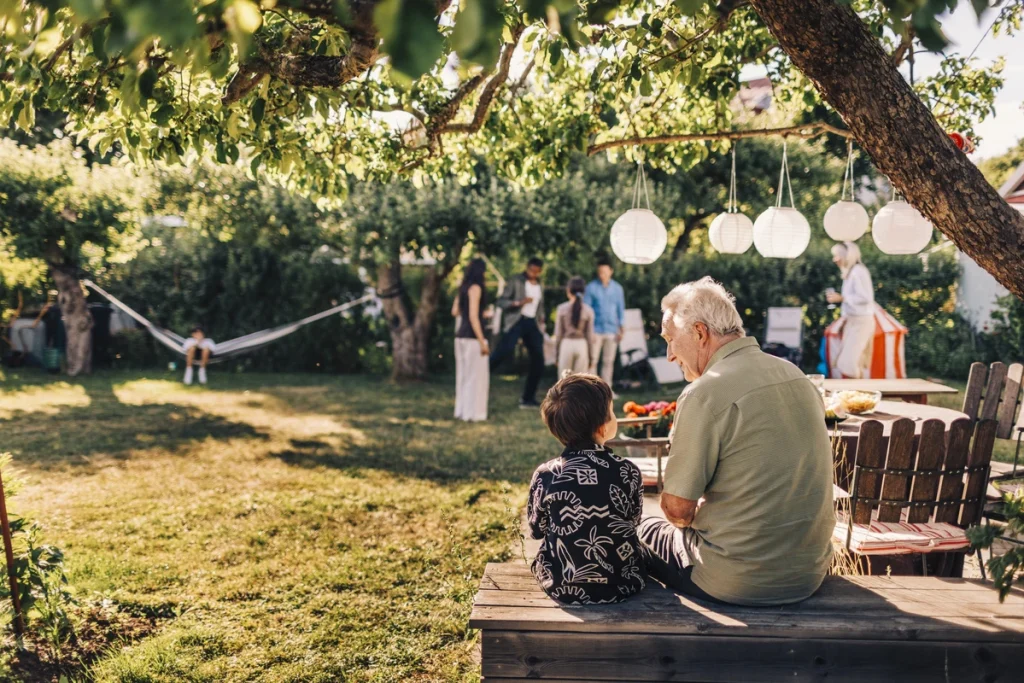
Why grandparents are quietly essential for children’s mental health — and how to make the most of their support
Today, childhood is more pressured and fragmented than in previous generations. Rates of anxiety and persistent sadness among young people have soared, and researchers and clinicians are searching for practical, human solutions. One of the clearest findings from decades of clinical practice is surprisingly simple: children thrive when grandparents are present in their lives. Kenneth Barish, a clinical psychologist with forty years’ experience, describes grandparents as providers of “emotional health molecules” — tiny, everyday interactions that build emotional resilience over time.
What grandparents actually offer
Grandparents bring different resources than parents, not because parents are failing, but because the role is distinct. Where parents must balance caregiving with work, rules, and future planning, grandparents can often give what children need most:
These repeated, small interactions — a walk together, a shared laugh, a bedtime story — accumulate into what Barish calls an emotional immune system, helping children cope with stress and uncertainty.
Less criticism, more process praise
One common harm in family dynamics is excessive criticism. Barish and other clinicians point out that frequent negative feedback undermines children’s confidence and motivation far more than a lack of praise. Instead of constantly evaluating outcomes (grades, trophies, rankings), adults should emphasise effort and growth. This approach — often labelled “growth mindset” — shifts the focus to resilience and learning, and grandparents are often ideally placed to model this: they can praise attempts, curiosity, and persistence without the high stakes parents sometimes carry.
How grandparents help counteract the ‘success obsession’
Modern families often emphasise achievement: cumulative credentials, extracurricular portfolios and future‑proofing. While ambition has its place, the culture of relentless performance can erode relational values like kindness and care. Grandparents frequently embody alternative priorities: narration, slowness, and relational continuity. By telling family stories, modelling empathy, and prioritising simple acts of care, they help children see that worth is not measured by grades or accolades.
Practical ways to boost grandparent involvement
Increasing meaningful contact with grandparents does not require dramatic life changes — small, consistent shifts often have the greatest impact. Consider these practical ideas:
When grandparent involvement needs mediation
Not all family situations allow easy grandparenting. Distance, health problems, past conflicts, or divergent parenting philosophies can make contact complex. In such cases, careful mediation or professional support can help establish healthy boundaries and roles. The goal is not to idealise grandparents, but to identify and protect the restorative interactions that benefit children most.
What schools and communities can do
Structural support makes intergenerational connections more feasible. Local policies and community initiatives can help:
Quick tips for parents
Why this matters now
As mental health challenges among young people become a public health concern, solutions that rebuild relational ecosystems offer both practicality and compassion. Grandparents provide a unique, low‑cost, high‑impact boost: a steady, human presence that teaches children they are seen, heard and valued beyond performance. In a fast, outcome‑driven world, the gentle, patient wisdom of grandparents may be exactly the counterweight many children need.