
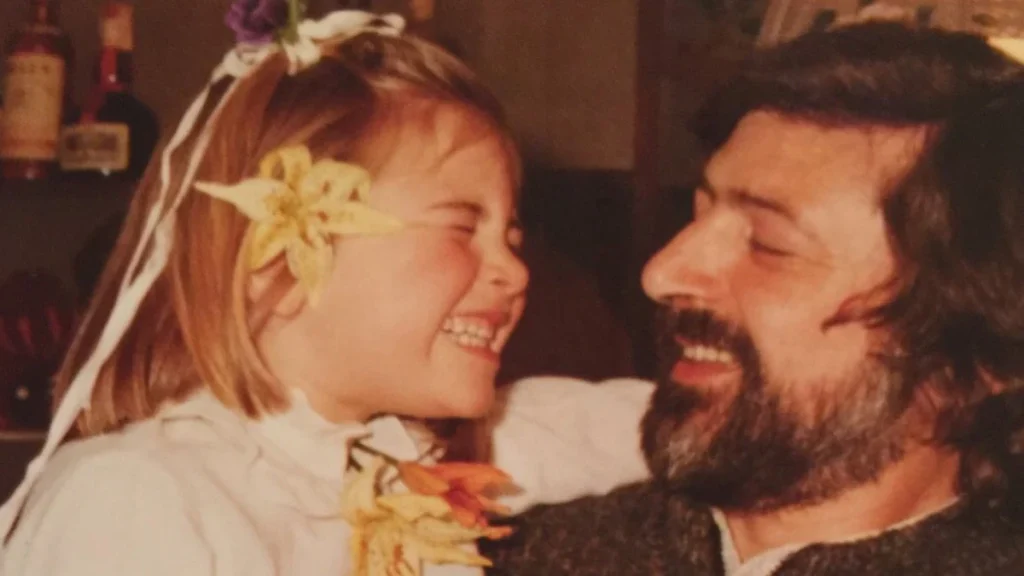
Few artists manage to reveal their tenderest selves so subtly that the revelation feels like stumbling upon a private letter. Francesco Guccini, the great Italian singer‑songwriter known for his blunt poetry and thick voice, accomplished precisely that in 1987 with “Culodritto,” a song tucked inside the album Signora Bovary. Written for his young daughter Teresa, the piece strips away the public mask to expose a father’s affection, wonder and gentle melancholy. For readers of Princess‑Daisy.co.uk who cherish intimate stories and emotional honesty, “Culodritto” is a perfect example of how music can preserve small, human truths.
When a public figure becomes unexpectedly private
Guccini cultivated the image of an austere “Maestrone” — a serious, sometimes taciturn bard of Italian life and struggles. That public persona made the tenderness of “Culodritto” all the more striking. The song is spare: voice accompanied primarily by two acoustic guitars, moving with the lullaby‑like cadence of a nursery tune. Its simplicity is deliberate; it allows the text to breathe and invites listeners into an intimate scene — a father watching his child with a mix of pride, wistfulness and something close to envy for that child’s untouched curiosity.
The charm of a dialect word turned term of endearment
The title itself is a small act of linguistic alchemy. “Culodritto” is a Modenese dialect expression describing the erect, theatrical way little children walk when they’re affronted or proudly marching through the world. On the surface, it could sound coarse; in Guccini’s hands, it becomes affectionate and playful. He repurposes a neighbourhood phrase and transforms it into an emotional anchor, a way to name an aspect of Teresa’s childlike dignity and stubbornness without sentimentality.
A portrait of fatherhood, tender and honest
What makes the song resonate is the portrait Guccini paints: not a didactic or heroic father, but a man who recognizes his own shortcomings and feels both protective and slightly jealous of his daughter’s pristine view of life. He asks her, gently, to keep holding his hand; he knows she will soon step beyond that safety into a world full of beauty and complexity. That admission — of being both guardian and the one in need — gives the song its quiet power.
Musical restraint that magnifies the words
Musically, “Culodritto” opts for minimalism. The stripped‑back arrangement — two guitars and an intimate vocal — evokes a domestic setting, a voice close enough to be a whisper. There are no grand orchestrations here because the point is not spectacle but confession. The hush and the pace mimic the cadence of a lullaby, and this makes the emotional core feel more authentic: the song’s smallness is its strength.
Signora Bovary as a family album
The album that houses the song, Signora Bovary, reads like a private gallery of affection. Alongside “Culodritto,” Guccini includes tracks for his father Ferruccio and other intimate dedications. This album‑as‑archive approach allowed him to explore personal themes without diluting his public commentary. The effect is paradoxically universal: the specifics — a dialect word, a father’s watchful eye — unlock feelings we all recognise about family, time and loss.
Why “Culodritto” still matters today
Nearly forty years on, the song remains moving because it resists easy sentiment. Guccini doesn’t dramatise; he observes. He treats childhood as a fragile, brave state rather than an object of nostalgia. In a culture often inclined toward performative emotion, the restraint of the song feels honest. It also offers a model of mature affection — a love that admits insecurity and embraces the inevitability of a child’s growth.
Listen differently: ways to experience the song
“Culodritto” is a delicate example of how a single, well‑placed word and a simple musical setting can crystallise a lifetime of feeling. For those of us who treasure intimate creativity, it’s a reminder that true artistry often hides in the smallest gestures — a man’s soft voice, a dialect expression, a hand held a little longer.