
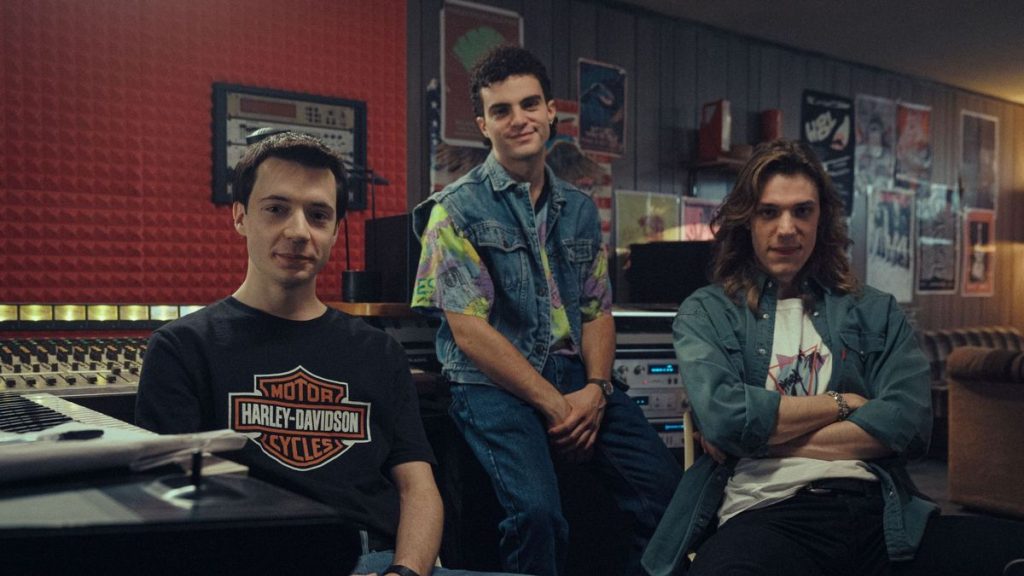
Why the finale of “Nord Sud Ovest Est” season 2 struck a chord with viewers
“Nord Sud Ovest Est” season 2 closed with an episode that felt less like an ending and more like a gentle, melancholic lesson about growing up, friendship and the cost of chasing dreams. The series — a fictionalised reimagining of the story behind the Italian pop duo 883 — has always balanced reality and invention. In its final chapter, that balance becomes a strength: it gives us characters who are recognisable, flawed, tender and ultimately human.
Two friends, two paths
The finale pivots on the emotional separation of Mauro and Max. Mauro’s choice to leave Pavia for Los Angeles — smitten, driven by a risky film project and hungry for reinvention — contrasts sharply with Max’s decision to remain, trying to find meaning while working with the Red Cross. The split isn’t presented as a dramatic betrayal, but as the natural divergence of two lives shaped by different needs: one needs escape and creation; the other seeks repair and belonging.
Fame as a burden
One of the series’ most truthful threads is how fame alters relationships and the self. Scenes where fans invade privacy, call emergency lines just to hear Max’s voice, or stage extreme stunts to meet their idol underscore the surreal pressure that success brings. Max’s attempt to cling to normality — to work, to friends, to love — reveals the lonely side of being adored. The show honours that ambivalence: success provides doors, but it also opens wounds.
Friendship at the centre
Where the finale truly shines is in its treatment of friendship. Instead of turning separation into a melodramatic fallout, the narrative insists on the lasting, complicated tenderness between the two men. Cisco — the mythic, grounding presence of the story — gives voice to memory and to continuity. The final image of older Mauro, Max and Cisco sitting together, smiling at each other in silence, is the episode’s quiet, devastating payoff: time passes, faces age, but stories and bonds endure.
Fantastic performances anchor the emotion
Elia Nuzzolo (Max) and Matteo Oscar Giuggioli (Mauro) carry the season with performances that feel lived‑in and generous. Nuzzolo captures Max’s wounded steadiness, the way competence masks insecurity. Giuggioli gives Mauro a restless, romantic energy — someone compelled to leap at the possibility of a dream, even when it costs him what he has. Their chemistry makes the separation believable and heartbreaking.
Why the fiction works
Director Sydney Sibilia and his team take liberties with facts, and that’s deliberate: the series opts for a verisimilar, poetic retelling rather than strict biography. This allows the drama to focus on emotion and archetype — the ‘ambitious one,’ the ‘anchor,’ the seductive but unreliable promise of success — making the story universal. You don’t need to know the 883 catalogue to feel the ache of the finale.
Themes that resonate beyond the story
Memorable sequences
Several moments linger: Max’s breakdown masked by professional duty; Mauro’s impulsive departure for Los Angeles, heartfelt and reckless; the simple domestic images that root the characters — a basement, an old car, a playground — which remind us that life keeps its small, sacred spaces despite fame.
What the finale suggests about the future
Rather than an absolute ending, the finale reads like a beginning: new albums, new projects, altered dynamics. It asks us to accept that some partnerships change form rather than evaporate. The story leaves room for reinvention and for new collaborations shaped by experience rather than nostalgia.
For whom this series speaks
“Nord Sud Ovest Est” is for anyone who remembers the intensity of being young and hungry; for those who have loved someone through a major life shift; for anyone who knows that success rarely equals peace. The series transforms a pop mythology into a meditation on choice, identity and the power of shared memories.
Final note on craft
The success of season 2 rests on its craft: understated direction, smart writing and casting that respects interior life. The show’s ability to hold both humour and melancholy, to make pop songs into emotional chapters, is rare. In the end, the series offers what many lasting stories do — a mirror that lets us see our own past and our capacity to keep walking forward.