
From Wounds to Wardrobes: How Ten Survivors Turned Their Cancer Journeys into a Powerful Stage Story
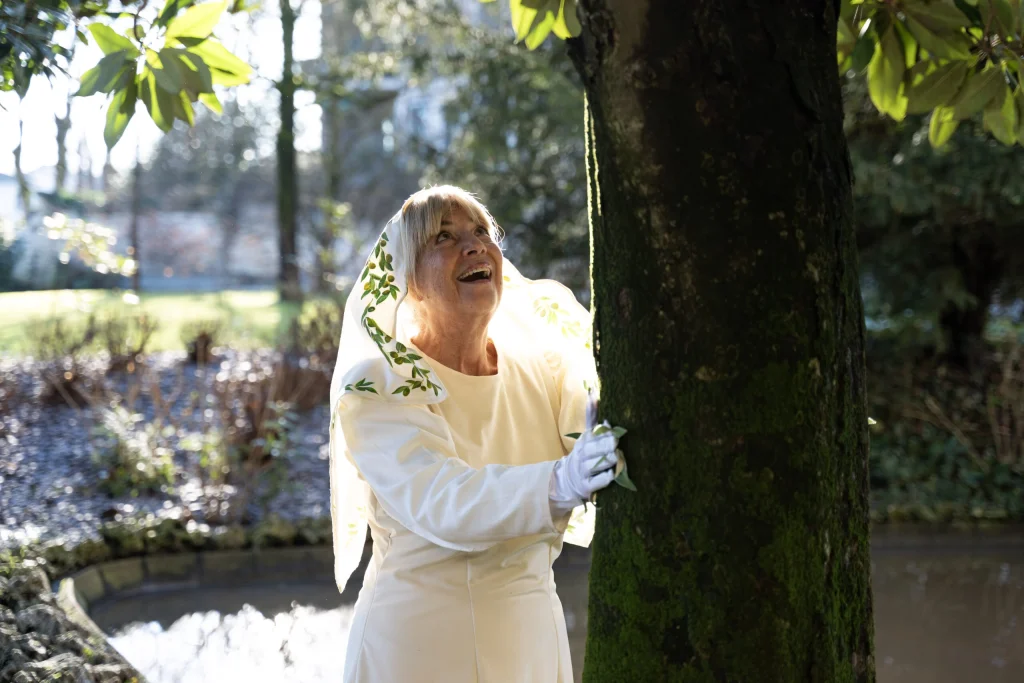
Last week at the historic Almo Collegio Borromeo in Pavia, an extraordinary theatrical project took place: Vestis et Vulnus. Instead of professional actors, the stage welcomed ten women who have survived cancer. Each woman embodied an allegorical virtue — a symbolic quality that helped her cross the threshold between life “before” and “after” illness. The result was an evening that mixed art, therapy and public witness, transforming scars into statements and private resilience into shared beauty.
What Vestis et Vulnus actually is
Vestis et Vulnus — literally “Garment and Wound” — was conceived and directed by artist and costume designer Claudia Augusta Botta and promoted by the National Centre for Oncological Hadrontherapy (CNAO). The performance drew its visual inspiration from the seventeenth‑century frescoes by Cesare Nebbia in the Collegio’s Salone degli Affreschi, which celebrate figures of moral strength and service. Here, however, the frescoes became a mirror: ten contemporary women paired with ten classical virtues, from Perseverantia to Pietas, reinterpreted through lived experience.
Why the format is so moving
These are not staged biographies but symbolic embodiments. Each participant selected a virtue that resonated with her journey — Noemi, who recovered her voice after a palate tumour and now conducts a choir, chose a form of renewed expression; Anita, who developed a deep, healing dialogue with nature during treatment and now tends an olive grove, embodied perseverance. Their garments are more than costumes: they function as emotional prostheses, helping the women to externalise complex inner transformations and to present them publicly with dignity.
The therapeutic value of performance
Art therapy and narrative medicine are well‑documented approaches to supporting recovery and post‑treatment identity work. Vestis et Vulnus goes further by centring agency: survivors are not passive recipients of sympathy, but creative authors of how their stories are told. Putting on a costume, stepping into an allegory, and performing a selected virtue is an act of reclaiming oneself — reframing wounds as sources of meaning rather than stigma.
How the allegories work
Each virtue acts as a narrative filter: it highlights a facet of survival, anchoring subjective stories in universal language. The framework lets the audience recognise themselves in fragments of the survivors’ experience.
Public rituals that honour private struggles
The choice of date — during the International Women’s Day period — and the municipal patronage give the show civic resonance. This is community theatre as public ritual: an occasion when private pain is acknowledged, aestheticised and collective. It affirms that survivorship is not merely a medical endpoint but a social process that deserves visibility and ritual recognition.
Costumes as emotional translators
Claudia Augusta Botta’s costumes were integral to the piece. They don’t simply “dress” the performers: they translate interior states into visual form. A heavy, textured sleeve might signal labour and resilience; a torn‑but‑stitched bodice can signify healing. By externalising invisible scars, clothing becomes a language — readable, beautiful, and political.
What this means for audiences and families
Psychosocial implications
Medical centres including CNAO increasingly acknowledge that cancer care must integrate psychological and social dimensions. Vestis et Vulnus models how institutions can partner with artists and communities to produce interventions that are therapeutic, aesthetically meaningful and socially constructive. The performance is thus also a public health gesture: it reframes survivorship as a complex, ongoing process that cultural practices can help to support.
Voices that refuse to be simplified
One striking feature of the evening was the refusal of simplification. Survivors’ stories rarely conform to tidy arcs of tragedy and triumph. Rather, we met messy, contradictory, deeply human accounts: a woman who regained her voice and later faced relationship rupture; another who found solace in soil and trees and now runs an olive grove. These are layered lives, not inspirational postcards. The show honours that nuance.
How fashion and care intersect
For our readers, there’s a practical subtext: clothing can hold emotional utility. Choosing garments that reflect new identity, combining comfort with symbolic meaning, or wearing a piece that communicates a personal value — these are small acts of self‑care. Vestis et Vulnus demonstrates that fashion is not frivolous when it becomes a vehicle for expression, dignity and reclaiming power.
From local event to broader conversation
While rooted in Pavia, the event raises themes that resonate internationally: how do we as societies acknowledge survivors? How can cultural institutions collaborate with health services to offer restorative public spaces? Vestis et Vulnus suggests a model where art and medicine co‑create rituals of recognition, helping survivors to narrate and re‑compose their lives in public, with generosity and artistry.