
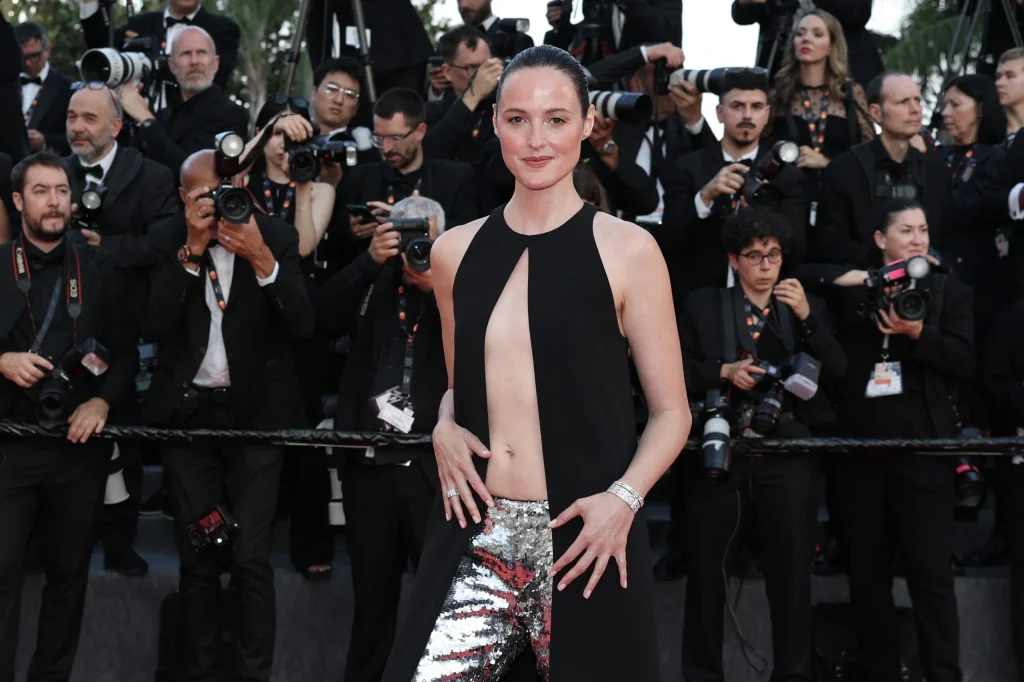
From nearly quitting to Cannes queen: the remarkable rise of Renate Reinsve
Renate Reinsve’s story reads like a film script: a near‑retirement from acting, a sudden call from a director, and then meteoric success on the world stage. At 38, the Norwegian actress has become one of the most intriguing faces of contemporary cinema — a Palme d’Or winner at Cannes for “Fjord”, an Oscar nominee for her role in “Sentimental Value”, and now appearing in the horror thriller “Backrooms”. What makes her journey compelling is not only the awards, but the steady, deliberate way she has built a career by choosing roles that resist easy categorisation.
The turning point: a role that changed everything
Five years ago, Reinsve seriously considered leaving acting. She even trained in carpentry as a ‘plan B’, telling late‑night audiences that manual work was “not quite the same” as performing. Then Joachim Trier called. The director, who had given her a line in “Oslo, August 31st” a decade earlier, wrote the part of Julie in “The Worst Person in the World” for her. That performance became a cultural touchstone — a portrait of a restless, brilliant, indecisive woman who refuses conventional narratives about romance and career. The role resonated especially with audiences in their thirties who saw in Julie a recognisable, authentic struggle for identity.
An actress who chooses complexity over comfort
After that breakthrough, Reinsve did not pursue the obvious glamour route. Instead, she alternated art‑house work with select international projects, favouring ambiguous, unsettled characters rather than comfortingly familiar roles. Titles like “A Different Man” and “Armand” demonstrate her appetite for psychologically demanding parts. In “Sentimental Value”, again directed by Trier, she takes on perhaps the most layered role of her career — Nora Borg — a woman marked by family fractures, anger and inward collapse. Her performance contributed to the film’s Grand Prix Special Jury recognition at Cannes and to Norway’s Oscar win for Best International Film.
Muse, yes — but not a cliché
The word “muse” tends to romanticise the relationship between a director and an actor. In Reinsve’s case, it undervalues her agency. She is a collaborative partner who elevates material through nuance and rigor. Trier has admitted writing for her; she has returned the favour by fully inhabiting his complex female protagonists, turning written sketches into vivid human presences. Her work is never decorative — it interrogates interior conflict and emotional contradiction.
Range and technique: why her performances land
Reinsve’s acting is rooted in restraint. She excels at micro‑expressions, interior ruptures and timing that feels lived‑in rather than engineered. In “The Worst Person in the World,” she navigates a character in motion — searching, improvising identity — while in “Sentimental Value” she embodies a woman frozen by grief and rage. This capacity to shift between kinetic vulnerability and frozen intensity is what makes her performances feel true rather than performative.
Stepping into new genres: “Backrooms” and beyond
With “Backrooms”, Reinsve explores horror — a genre that can test different aspects of an actor’s toolkit. Horror allows for high‑intensity emotional display, but Reinsve’s involvement suggests a psychological approach rather than simple shock value. She brings depth to roles that could otherwise flatten into tropes, ensuring that even within genre cinema, viewers encounter a fully formed human being.
Private life: guarded and meaningful
Renate keeps her private world intentionally closed. She has a son, born in 2019, from a prior relationship with director Julián Nazario Vargas. Motherhood, she has said, is central and something she protects from publicity. This discretion contributes to her public image as an artist who seeks a boundary between craft and private life — an approach that seems to sustain the intensity she brings to demanding roles.
Why she matters to a generation
Reinsve’s characters are anti‑models: they resist tidy romantic arcs and clear‑cut professional triumphs. For audiences — particularly young adults navigating uncertainty — her figures provide recognition more than prescription. She represents a woman who is allowed to be confused, to change direction, to fail and to continue. That authenticity is powerful in a media landscape often preoccupied with polished narratives.
Looking forward: career with momentum
Between festival triumphs and carefully chosen projects, Renate Reinsve’s trajectory is one of deliberate ascension. Whether she remains closely allied with directors like Trier or broadens her international collaborations, the constant is her commitment to roles of emotional weight. For cinema, she brings a rare combination: naturalism, emotional precision and the courage to avoid easy answers.