The fifth day of Milano Fashion Week for Spring‑Summer 2027 felt like a love letter to process, materiality and memory. Rather than chasing dazzling novelty, many designers turned to what’s already in our wardrobes and asked: what if we changed how we use it? The result across the shows ranged from rigorously tailored classics to pieces that celebrate the visible hand of the maker. Here’s a stylish tour of the highlights worth bookmarking for your autumn‑to‑summer wardrobe.
The thread that ties the day together: reworking the familiar
Across the calendar, the recurring gesture was simple: take something familiar — a blazer, a trench, a family heirloom of lace or brocade — and alter its proportions, materials or finishing to make it feel new. That theme showed in varied guises: Ermanno Scervino’s nautical romance, Ferragamo’s cinched waist discipline, Bottega Veneta’s deliberate raw edges, and Dolce & Gabbana’s exuberant family trunk of textiles.
Ermanno Scervino: corsair tailoring meets lace
Scervino opened the day with a dramatic nod to island cinema and seafaring romance. A corsair jacket — gold and copper ribbons, silk toggles and a weathered surface — served as the collection’s anchor, paired with duchess miniskirts, masculine jeans and leather shorts. Under these outer layers peeked delicate slips, corsetry and sheer knits, creating a push‑pull between toughness and softness.
Ferragamo: the waist as organising principle
Maximilian Davis refocused Ferragamo around the waist. Double belts and strategic cinching reshaped jackets and dresses into elegant hourglass silhouettes inspired by 1940s uniforms—functional pockets, utilitarian proportions—then softened with transparent rubber, leather shirts and knotted silks. Accessories reworked archival codes: the 1947 wedge reimagined, the Vara bow reinvented, and the Hug bag extended horizontally.
Bottega Veneta: making the process visible
Louise Trotter’s vision for Bottega Veneta was intentionally raw. Crochets frayed at the edges, woven pieces revealed unfinished borders, and seams were allowed to speak. Blazers, trench coats and sartorial trousers were contrasted with open‑weave crochet, almost‑raw raffia bags and tactile materials that invite touch. Here imperfection isn’t an effect but the point — the garment reveals the maker’s hand.
Dolce & Gabbana: the family archive goes theatrical
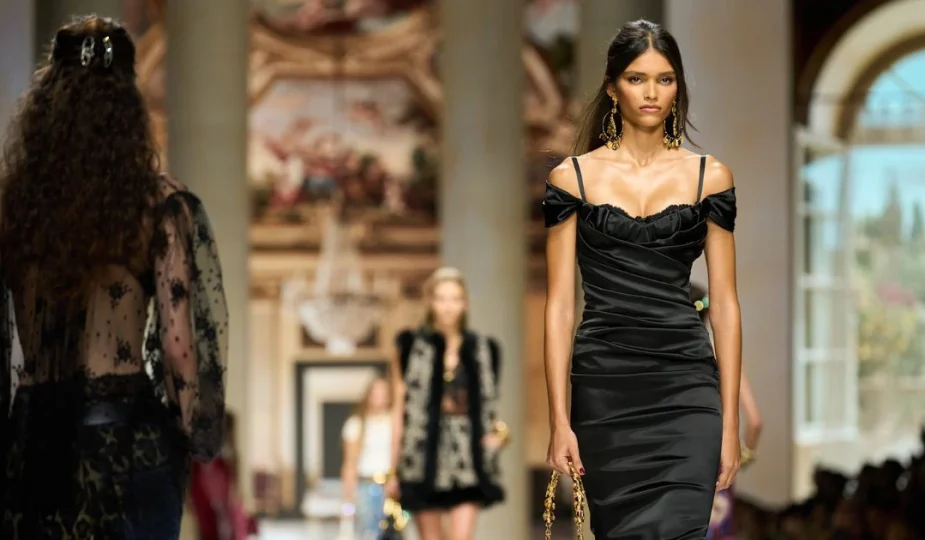
Dolce & Gabbana leaned into “Sicilian Extravaganza,” mixing brocades, upholstery fabrics, pastel lace and leopard into an exuberant family wardrobe. Lingerie appeared under tailored pieces; miniskirts shortened the distance between parlor and street. The look reads like a curated trunk of treasured garments — pearls, cameos and coral pendants layered together like family heirlooms.
MSGM and the art of reinvention
Massimo Giorgetti’s MSGM channeled Mario Schifano with bold colour, graphic prints and joyful mixes of pop and painterly motifs. Rigid military pockets and contrast topstitching gave a grounding structure to organza overlays, tie‑dye knits and nylon transparencies. The message: art can live in your everyday wardrobe if you let colour and graphic detail lead.
Construction as new luxury
Other designers explored construction and the domestic archive in intimate ways: Neithan Herbert’s debut paid tribute to memory with handcrafted pleats and exposed backs; Marco Rambaldi folded wallpaper florals into denim prints and crochet accents; ACT N°1 and Victor‑Hart questioned traditional tailoring with rotated lapels and offset buttons. The common thread is a renewed interest in how garments are made — seams, revers and exposed stitching become the signature.
How to adopt the ‘unfinished’ trend with subtlety
Milano’s fifth day reminded us that fashion’s future can be a respectful revision of its past: reworked classics, intentional marks of making and a tactile approach to materials. Whether you’re drawn to the tailored discipline of Ferragamo or Bottega Veneta’s open‑weave honesty, there’s a way to bring these ideas into your wardrobe without sacrificing practicality. In short: this season, the most luxurious detail might just be the trace of a human hand.