
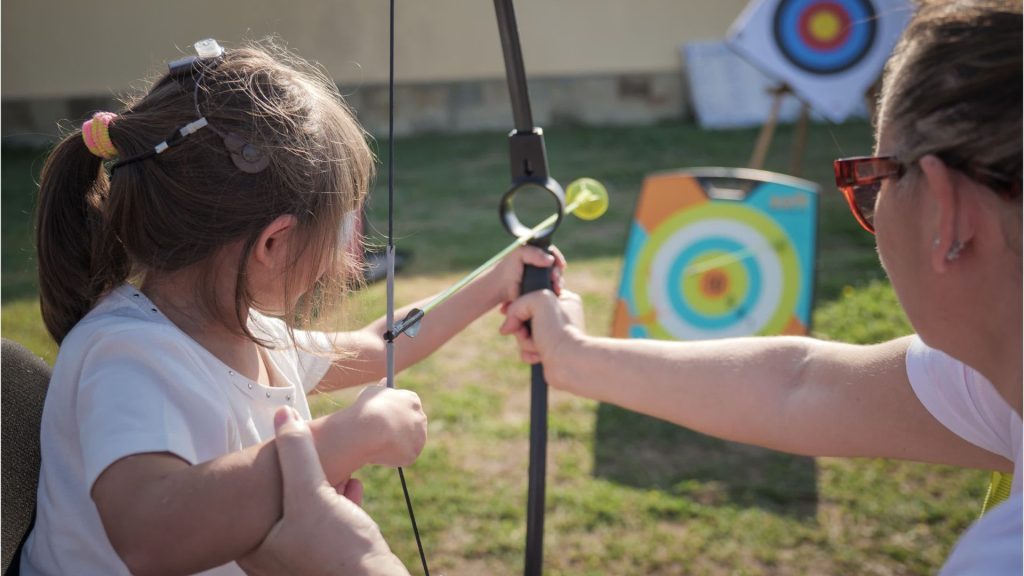
The Bambino Gesù Pediatric Hospital in Rome is expanding the idea of rehabilitation by turning adapted sport into a bridge to community inclusion. In collaboration with the Italian Paralympic Committee (CIP), the hospital’s Day Hospital for Neurorehabilitation and Adapted Sports has launched a pathway that lets children and young people with disabilities try multiple sports, find the activity that suits them best, and continue practicing in clubs near home. This initiative reframes sport not as a mere therapeutic tool but as a route to autonomy, relationships and lasting participation.
A tasting‑menu approach: try before you choose
At Palidoro, the project “Sport at OPBG, together for all” gives children aged 3 to 18 the chance to sample a range of adapted disciplines — from five‑a‑side football and Baskin to table tennis, archery and adapted cycling. The principle is simple and powerful: rather than asking a family to commit to a single sport, specialists invite youngsters to explore in a safe, supportive environment. This “tasting” approach is crucial because many families face barriers — physical accessibility, cost, lack of equipped local clubs or trained staff — that make trying a sport far from straightforward.
A multidisciplinary team that holds hands with families
The pathway is led by a multidisciplinary team: physiatrist, adapted physical activity technician, occupational therapist, physiotherapist and sports coaches work together to guide each child. They assess abilities, suggest adaptations and progressively match the youngster with a discipline that fits their abilities and preferences. Importantly, this is not a one‑off event; the programme is designed as part of a longer pathway from hospital rehabilitation to community sport participation.
Real stories: athletes who show what’s possible
Role models were central to the Palidoro day. Paralympic swimmer Domiziana Mecenate — European Champion in 2026 — and parakarate vice‑champion Valerio Di Cocco shared personal stories of sport as a source of identity, friendship and achievement. Also present was Daniele Garozzo, Olympic foil champion turned sports doctor, who offered a compelling testimony about the human side of sport — that the people you meet along the way often matter more than medals. These testimonials underline that sport adapted for disability can lead to high‑level competition but, crucially, also to meaningful social connections.
From pilot experience to sustained practice in the community
A central ambition of the project is continuity. After a child discovers a sport in the hospital setting, the team actively links families to nearby clubs and associations so the activity can be pursued locally. That handover — from hospital to community club — is what gives the programme long‑term impact. The objective is not only to teach a skill but to embed the child into a local sporting environment where friendships, routine and belonging can flourish.
Spaces and equipment: practical foundations for inclusion
Palidoro already hosts dedicated facilities such as “Carlo’s Island,” an adapted basketball court opened in 2023, and a test track for mobility aids where children can try adapted bikes and frame runners. These spaces are essential: they provide the controlled environment needed for initial learning and demonstration of abilities, and they showcase the range of assistive devices that make sport possible for many children.
Ambitious targets: scaling up inclusion
The plan sets tangible targets: to increase the offer to around 15 adapted sports and to scale involvement from 60 to 250 children and young people per year. Equally important is the goal to raise the percentage of participants who continue with a community sports activity after leaving hospital — from 30% to 50%. This metric captures the programme’s ultimate purpose: not brief exposure but durable change.
Why this model matters
Barriers still to address
Despite the programme’s successes, real obstacles remain: many local clubs lack adapted equipment or trained coaches; economic or transport limitations can block families; and accessible facilities are unevenly distributed. Overcoming these issues will require sustained partnerships between hospitals, Paralympic committees, local authorities and voluntary organisations, plus investment in coach training and accessible infrastructure.
What families can expect
The Bambino Gesù project reframes adapted sport as an everyday possibility rather than a rarefied specialist service. For families, this means access to choice, pathways and continuity — and for children, a real chance that sport will become a lasting part of life, not just a therapy. As the project scales, its ambition is clear: to make sport a practical, joyful route to independence and social belonging for many more young people.