
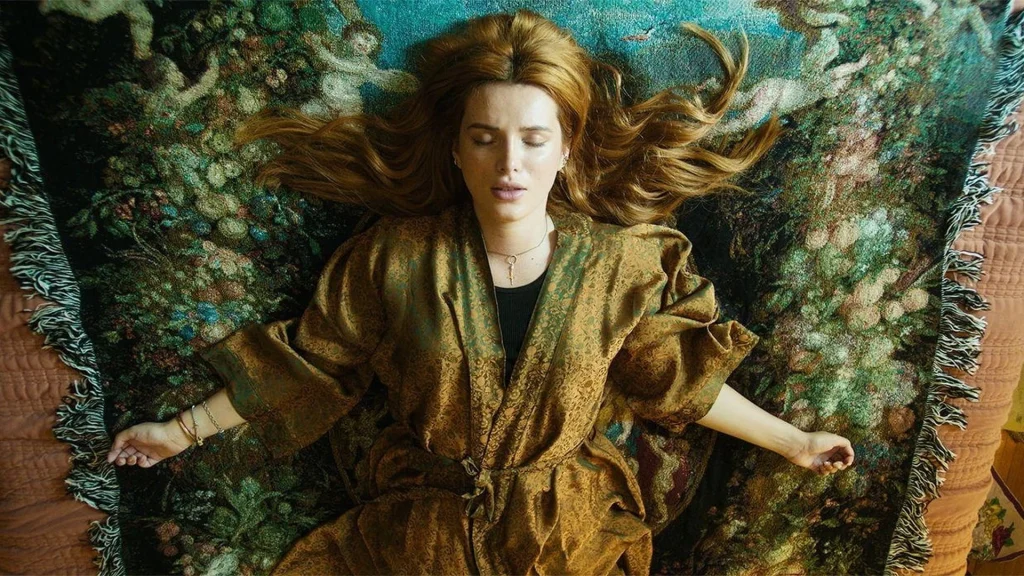
Saint Claire: Bella Thorne Plays a Disturbing Schoolgirl Killer in Tonight’s Chilling Thriller
Tonight at 9:20pm on Rai 4, Saint Claire, adapted from Don Roff’s Clare at Sixteen, arrives on Italian screens with Bella Thorne in the lead role. If you’re drawn to dark, psychological thrillers that blur the line between fanaticism and trauma, this one is worth your time. The film positions Thorne as Clare Bleecker, a young woman whose outward innocence masks a terrifying secret — she is a serial killer guided by voices and a merciless moral code. It’s a chilling, complex portrait that hinges on performance and atmosphere rather than gratuitous violence.
Plot essentials: a small town with big secrets
Clare lives with her grandmother in a sleepy American town after losing her parents. On paper she’s the classic quiet student in a Catholic school—introverted and withdrawn. Under the surface, though, she’s the opposite: ruthless, convinced she’s an instrument of justice. The narrative follows her as she punishes those she believes have harmed her loved ones. Early on, a brutal killing spirals Clare into a much larger web of corruption, greed and systemic violence within the town. That tension — the juxtaposition of pastoral calm and moral rot — fuels the film’s dread.
Bella Thorne: a risky, commanding turn
Bella Thorne carries the film on her shoulders. Her take on Clare is simultaneously fragile and unnerving. Thorne captures the character’s contradictions: the soft schoolgirl exterior and the cold, almost doctrinal certainty of a woman who hears directives she cannot ignore. The performance does not rely on shock value; instead, it mines nuance — a sideways glance, a small mechanical motion, the way she modulates her voice when a vision takes over. This makes Clare unsettlingly human and keeps viewers ambivalent — both repelled by her acts and compelled to understand why she commits them.
A strong supporting cast
Saint Claire benefits from capable company. Rebecca De Mornay plays Clare’s grandmother, adding layers of melancholy and protective warmth that contrast with Clare’s brutality. Ryan Phillippe appears in a role that adds an element of adult ambiguity — his character’s interactions with Clare complicate the viewer’s moral reading of events. These supporting performances ground the story and avoid letting it drift into simplistic horror tropes.
What the film explores beyond the murders
At its heart, Saint Claire is less a whodunit and more an exploration of why violence emerges within communities. The film interrogates how trauma, religious fervour and local corruption can coalesce into something dangerous. Clare’s visions — framed as prophetic, almost Joan of Arc–like impulses — raise provocative questions: Is she deluded, manipulated, or acting on a moral code that the rest of the town secretly endorses?
Stylistic notes: mood and pacing
The film leans on atmosphere. Cinematography emphasises empty streets, religious iconography and domestic spaces that feel both safe and claustrophobic. The pacing is deliberate; director and editors prefer to build tension through silence and suggestion rather than rapid cutaways. This measured tone will appeal to viewers who enjoy slow-burn psychological thrillers that reveal psychological complexity over time.
Trigger warnings and viewing considerations
Saint Claire contains depictions of violence, psychological distress and morally ambiguous justice. If you’re sensitive to portrayals of trauma or graphic scenes, approach with caution. The film is intended as a psychological study rather than sensationalist horror, but its subject matter is intense.
Why watch tonight?
Conversation starters after the credits roll
Saint Claire invites reflection as much as it delivers suspense — a tense, unsettling watch tonight for anyone intrigued by the psychological complexity behind violent acts and the societal cracks that allow them to happen.